Home/Blog/Day Programs for Adults with Disabilities: A Complete Guide for Maryland Families
Day programs
Day Programs for Adults with Disabilities: A Complete Guide for Maryland Families
Discover day programs for adults with disabilities in Maryland, including activities, life skills, community participation, Maryland DDA services.
Article
Finding the right support for a loved one with a disability can feel overwhelming, especially when you want them to build independence, develop meaningful relationships, and enjoy a fulfilling daily life. For many families, day programs offer opportunities to explore interests, practice everyday skills, connect with the community, and work toward personal goals.
However, not every program provides the same activities or level of support. Understanding the available options can help families make informed decisions based on their loved one's abilities, preferences, and support needs.
If you are exploring day programs for adults with disabilities, this guide explains what these programs are, the activities they may offer, how Maryland's disability service system works, and what to consider when choosing appropriate support.
At Sparkling Care Inc., we believe every individual deserves respectful, person-centered support that recognizes their strengths, preferences, and potential. Understanding your options is an important first step toward finding support that fits your family.
What Are Day Programs for Adults with Disabilities?
Day programs for adults with disabilities are structured services or activities designed to help individuals participate in meaningful daily experiences outside their usual home routine. Depending on the program, participants may develop life skills, take part in recreational activities, build social connections, explore employment interests, or become more involved in their communities.
These programs can serve adults with intellectual disabilities, developmental disabilities, autism, and other support needs. The activities, eligibility requirements, and available assistance vary by provider and service type.
Some programs operate primarily in dedicated facilities, while others take place in community settings such as libraries, recreation centers, shops, parks, and volunteer locations.
The main objective should be to support each person's individual goals rather than simply fill the day with activities.
Why Are Day Programs Important?
A meaningful daily routine can create opportunities for learning, personal growth, and community participation. With suitable support, adults with disabilities may have opportunities to:
Practice everyday living and communication skills.
Explore personal interests and hobbies.
Develop friendships and social connections.
Make choices and express personal preferences.
Participate in community activities.
Build confidence through new experiences.
Explore vocational interests and employment opportunities where appropriate.
The right program should respect the participant's choices, encourage participation, and provide support suited to their individual needs.
A Look at Day Program Activities for Adults with Disabilities
The range of activities depends on the program’s focus, the resources on hand, and what participants need. When evaluating day programs for adults with disabilities, ask how activities support personal goals and whether participants can choose experiences that interest them.
1. Daily Living and Independent Living Skills
Independent living skills can help adults manage everyday situations with greater confidence. Depending on individual abilities and goals, activities may include practicing simple meal preparation, organizing personal belongings, following daily routines, making shopping lists, or learning how to navigate familiar community locations.
As an example, someone might practice shopping for groceries by selecting products, recognizing prices, and speaking with the cashier. Another person might work on planning a daily schedule or completing a familiar task with less assistance.
The aim is not to expect everyone to achieve the same level of independence. It is to help each individual develop skills that are meaningful to their own life.
2. Social Activities and Communication
Social interaction can provide opportunities to practice communication, develop relationships, and participate in shared experiences.
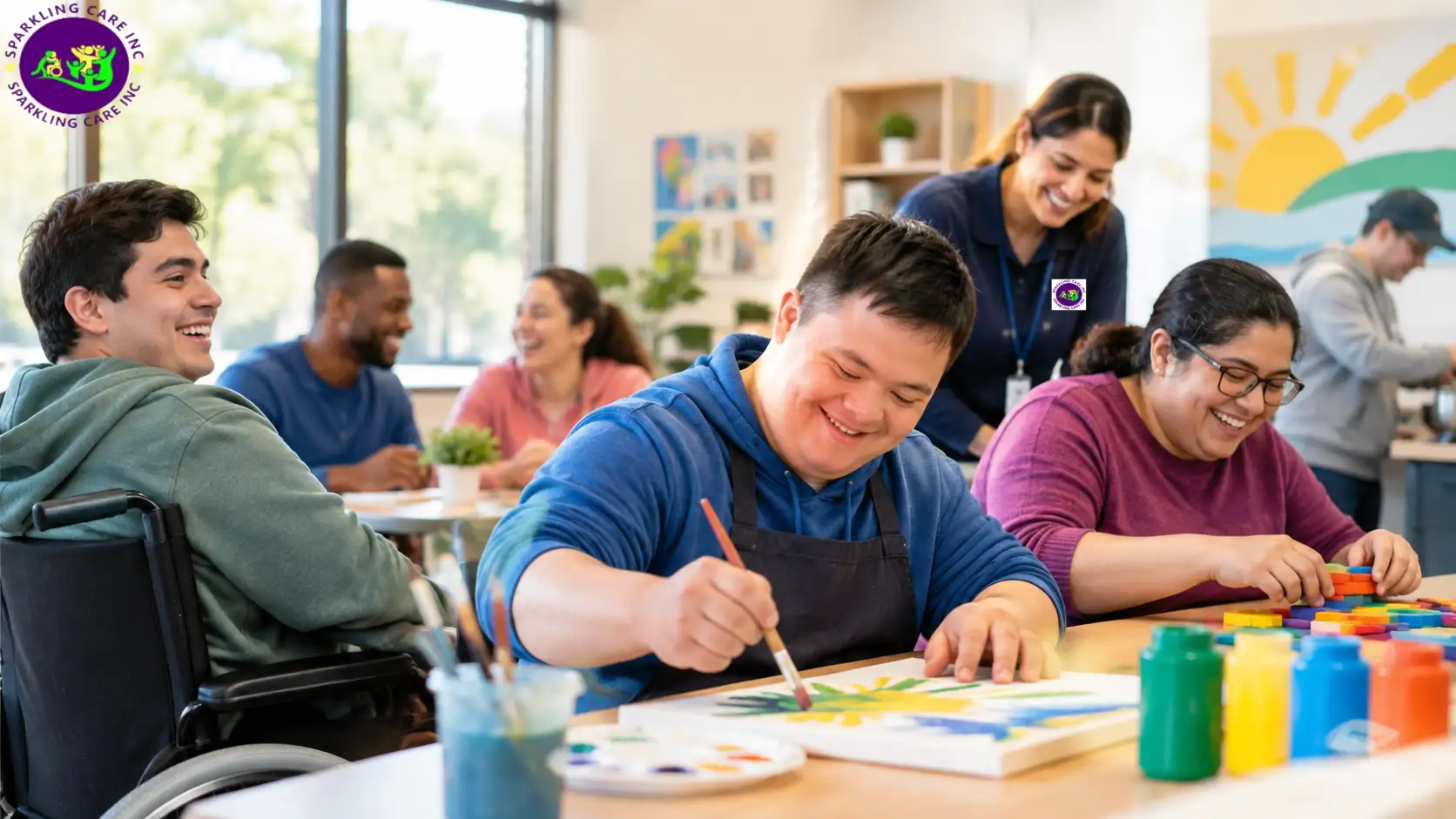
Depending on individual preferences, activities may include group games, conversations, arts and crafts, music, collaborative projects, or community events.
Staff can support participants by encouraging respectful interactions, allowing enough time to communicate, and recognizing different communication styles.
For adults who communicate using assistive technology or alternative communication methods, an inclusive program should respect those methods and help make participation accessible.
3. Recreation, Hobbies, and Creative Activities
Recreational activities can help adults explore interests, express themselves, and enjoy their day.
Examples may include painting, gardening, music, cooking activities, puzzles, fitness sessions, and other accessible hobbies.
A good program considers what participants actually enjoy instead of assuming that one activity is appropriate for everyone. Families should ask whether individuals can choose activities and whether adaptations are available when needed.
4. Community Participation and Volunteering
Community participation allows adults with disabilities to explore places, experiences, and relationships beyond their homes.
Depending on the program and the participant's goals, activities may include visiting public libraries, attending community events, using recreation facilities, volunteering, or practicing everyday tasks in local settings.
Maryland's Developmental Disabilities Administration (DDA) describes Community Development Services as support that helps individuals become more connected to their communities and develop or maintain the social skills needed to interact confidently with others. Learn more through the Maryland DDA Community Development Services resource.
5. Employment Exploration and Skill Development
Some adults want to explore employment, discover their strengths, or prepare for work. In these cases, employment-focused services may be more appropriate than a general recreational program.
Activities and supports may involve identifying career interests, learning workplace routines, developing job-related skills, finding employment opportunities, or receiving ongoing assistance at work.
Maryland DDA lists employment services that can include discovery, job development, ongoing job supports, and other forms of employment assistance.
Families can explore their options by visiting the Maryland DDA Employment Services information.
Who Can Benefit from Day Programs for Adults with Disabilities?
Day programs may benefit adults who want structured activities, opportunities for social interaction, skill development, or greater involvement in their communities.
However, the most suitable setting depends on the person's goals, preferences, abilities, health and safety needs, and the support available.
Adults with Intellectual and Developmental Disabilities
Some adults with intellectual or developmental disabilities benefit from structured opportunities to practice daily living skills, communicate with others, explore hobbies, and participate in community activities.
Individualized support can help make these experiences accessible and meaningful.
Adults with Autism
Adults with autism may have different sensory preferences, communication styles, interests, and support requirements. A suitable program should consider these differences rather than expect every participant to follow the same routine.
Families may want to ask about predictable schedules, sensory-friendly spaces, quiet areas, communication accommodations, and opportunities to take breaks.
A supportive environment should respect individual preferences and allow participants to engage in ways that feel comfortable to them.
Adults Who Want Greater Community Involvement
Some adults want to meet new people, discover hobbies, explore local resources, or participate more regularly in community life.
A community-based service may help them work toward these goals while receiving appropriate assistance.
Adults with More Specialized Support Needs
Some individuals need additional help with mobility, communication, personal care, behavior-related support, or health-related needs. Not every day program is equipped to provide every type of assistance.
Before choosing a service, discuss the person's specific requirements with the provider and confirm whether the program can safely and appropriately accommodate them.
Understanding Maryland DDA Services for Adults with Disabilities
When researching day programs for adults with disabilities in Maryland, families may encounter the term Meaningful Day Services. This term is used within Maryland's Developmental Disabilities Administration service system.
Depending on eligibility, authorization, and individual goals, relevant services may include Day Habilitation, Community Development Services, and Employment Services. These are distinct service types, and they should not be treated as interchangeable.
What Is Day Habilitation?
Maryland DDA describes Day Habilitation as a service that supports skill development and social participation in small or large groups. Support may be provided through provider programs or in community settings.
This service is associated with the Community Pathways Waiver. Families should speak with their Coordinator of Community Services (CCS) about eligibility and whether the service is appropriate for the individual.
Read the official Maryland DDA Day Habilitation guidance.
What Are Community Development Services?
Community Development Services focus on helping individuals become more connected to their communities while developing or maintaining social and other relevant skills.
For someone who wants to build relationships, participate in community activities, and become more confident in everyday interactions, this service may be worth exploring.
The appropriate support plan should reflect the individual's interests, goals, and assessed needs.
How Can Families Explore Eligibility?
Maryland DDA has an eligibility application process for individuals seeking its services. The process may involve submitting an application, providing supporting documentation, participating in an interview or assessment, and receiving an eligibility determination.
Important: Being found eligible for DDA services does not automatically mean that funding or a particular service is immediately available. Funding, waiver enrollment, service authorization, and individual eligibility requirements can affect access.
Families should review the Maryland DDA eligibility application guidance and the DDA waiver application process. A Coordinator of Community Services can help explain applicable requirements and available options.
How to Choose the Right Day Program for an Adult with Disabilities
Choosing a program involves more than comparing locations or activity schedules. The right choice should reflect the individual's needs, interests, preferences, and long-term goals.
1. Identify Personal Goals and Interests
Begin by talking with your loved one about what they enjoy and what they would like to learn or experience.
Their goals might include making friends, exploring art, improving daily living skills, visiting community locations, or investigating employment options.
Where possible, involve the individual directly in the decision. Their preferences should guide the selection process.
2. Ask About Individualized Support
Find out how the provider learns about each participant and adapts activities to individual goals.
Ask whether staff consider communication preferences, sensory needs, mobility, personal routines, and the level of assistance required.
A program should be able to explain how it supports participation without expecting everyone to follow an identical plan.
3. Understand Staff Training and Safety Procedures
Ask about staff experience, training, supervision, emergency procedures, and the process for communicating concerns to families or authorized representatives.
If your loved one needs specialized assistance, confirm that appropriate staff and resources are available.
You can also ask how the provider handles changes in routine, challenging situations, and unexpected health or safety concerns.
4. Check Accessibility and Transportation
Location and transportation can significantly affect whether a program is practical for your family.
Ask about accessible facilities, transportation arrangements, pickup and drop-off procedures, and whether community outings are included.
If transportation is provided separately, confirm who is responsible for arranging it and whether the service meets your loved one's needs.
5. Visit the Program and Ask Questions
If visits are available, observe how staff interact with participants and whether the environment feels welcoming and respectful.
Consider asking:
What does a typical day look like?
Can participants choose their activities?
How are individual goals established and reviewed?
What support is available for communication and personal care?
How are families kept informed?
What happens if a participant needs additional assistance?
What are the eligibility, enrollment, and funding requirements?
Are trial visits or introductory meetings available?
The answers can help you determine whether a program is suitable before making a commitment.
What Is the Difference Between a Day Program and In-Home Support?
Day programs and in-home support address different needs. Some families may benefit from one option, while others may explore a combination of services where permitted and appropriate.
A day program generally focuses on structured activities, social participation, skill development, or community involvement during scheduled hours.
In-home support focuses on assistance within the person's home or daily routine. Depending on the authorized service, this may include support with everyday activities and individualized needs.
When comparing options, consider your loved one's preferences, the type of assistance needed, opportunities for community participation, scheduling, transportation, and available funding.
The goal is to identify support that fits the person—not to assume that one model is automatically better than another.
How Sparkling Care Inc. Can Help Families Explore Disability Support
Finding appropriate services can take time, especially when you are balancing eligibility requirements, daily responsibilities, and your loved one's individual needs.
Sparkling Care Inc. provides support services for individuals with disabilities, with an emphasis on individualized care and meaningful participation. Its service offerings include areas such as community development, transportation, personal support, and nursing support. Families should contact the organization to confirm current availability, eligibility requirements, and whether a particular service fits their needs.
When discussing support options, it can help to share your loved one's goals, preferred activities, communication needs, transportation requirements, and any assistance they need throughout the day.
A conversation with a provider can help you understand which services may be relevant and what steps to take next.
Frequently Asked Questions About Day Programs for Adults with Disabilities
What is the purpose of a day program for adults with disabilities?
The purpose is to provide meaningful opportunities for activities, social interaction, skill development, and community participation. The exact focus depends on the program and the individual's goals.
What activities are available in adult disability day programs?
Activities may include life skills practice, arts and crafts, recreation, social activities, community outings, volunteering, and employment exploration. Offerings differ by provider and service type.
Are day programs for adults with disabilities available in Maryland?
Yes. Maryland has DDA service options that include Day Habilitation, Community Development Services, and Employment Services. Access depends on applicable eligibility, waiver, authorization, and provider requirements.
Does Maryland DDA pay for day programs?
Certain services may be available through Maryland DDA's waiver system for eligible individuals. Eligibility alone does not guarantee immediate funding or enrollment. Families should confirm current requirements with DDA and their Coordinator of Community Services.
How do I choose a day program for my loved one?
Start with their interests and goals. Then assess staff training, individualized support, accessibility, activities, transportation, safety procedures, eligibility requirements, and the provider's ability to meet their specific needs.
Can adults with autism participate in day programs?
Some programs support adults with autism, but suitability varies. Ask about sensory accommodations, communication support, predictable routines, individual preferences, and staff experience.
Find the Right Support for Your Loved One with Sparkling Care
Choosing among day programs for adults with disabilities is about more than filling a schedule. It is about finding opportunities for personal growth, meaningful relationships, greater independence, and participation in the community.
Every individual has different strengths, interests, and support needs. Taking time to understand those differences can help families make more informed decisions about the services they explore.
Sparkling Care Inc. is here to help you take the next step. If you are exploring disability support services in Maryland, reach out to discuss your family's needs and learn more about the services offered in Sparkling Care Inc. that may be appropriate for your loved one.
Contact Sparkling Care today to start a conversation about personalized support and meaningful community participation.
Website: https://www.sparklingcareinc.com/
Phone: 240-899-3251
Email: contact@sparklingcareinc.com
Together, let's explore support options that respect your loved one's individuality and help them work toward a more connected, fulfilling life.
Service availability, eligibility, and funding vary. Contact Sparkling Care and the relevant Maryland agencies to confirm current details.