Home/Blog/Programs for Special Needs Adults: A Guide to Support, Activities, and Independence
Day programs
Programs for Special Needs Adults: A Guide to Support, Activities, and Independence
Explore support programs for special needs adults, including day services, independent living, community activities, and vocational opportunities.
.png)
Article
Programs for Special Needs Adults: A Guide to Support, Activities, and Independence
Finding the right support for an adult with disabilities is an important step toward building a meaningful, fulfilling, and independent life. Families often spend considerable time researching programs, exploring available services, and understanding which opportunities best match their loved one's abilities, interests, and personal goals.
Today, programs for special needs adults offer a variety of opportunities to develop everyday living skills, build meaningful relationships, participate in community activities, and explore personal interests. These programs recognize that adulthood is a time for continued learning, personal growth, and greater independence.
However, choosing the right program can sometimes feel overwhelming. Families may have questions about available services, eligibility requirements, daily activities, costs, and the level of support their loved one may need.
At Sparkling Care Inc., we believe that every individual deserves personalized support that respects their choices, recognizes their abilities, and encourages their aspirations.
This guide explores the different types of programs available for adults with disabilities, the benefits they may provide, and how families can identify opportunities that support meaningful living.
What Are Programs for Special Needs Adults?
Programs for special needs adults are services, activities, and support opportunities designed to help adults with disabilities participate more fully in everyday life.
These programs may support individuals with intellectual disabilities, developmental disabilities, autism, physical disabilities, or other conditions that create a need for additional assistance.
Rather than focusing only on limitations, effective programs recognize each person's strengths, preferences, abilities, and potential.
Depending on individual needs, programs may provide opportunities to:
Develop everyday living and self-care skills
Explore hobbies and personal interests
Build social connections and friendships
Participate in recreational and community activities
Develop communication and decision-making skills
Explore employment and vocational opportunities
Strengthen confidence and self-advocacy
Work toward greater independence
The services available vary depending on the provider, location, eligibility requirements, and the individual's support needs.
Some programs offer structured activities during the day, while others provide individualized assistance, community-based experiences, residential support, or opportunities to develop specific skills.
The most suitable program is one that considers the whole person rather than focusing exclusively on a disability or diagnosis.
Why Are Support Programs Important for Adults with Disabilities?
The transition into adulthood brings new opportunities and responsibilities. Individuals may want to explore new interests, develop friendships, make personal decisions, or participate more actively in their communities.
At the same time, families may need to identify appropriate services that provide continued support beyond school-based programs.
Support programs can help individuals navigate these changes while creating opportunities for personal growth.
1. Encouraging Independence
Independence means different things to different people.
For one individual, it may mean preparing a simple meal independently. For another, it may involve choosing daily activities, communicating personal preferences, managing a routine, or participating in community events.
Programs that encourage independence provide opportunities to practice skills in supportive environments.
Rather than automatically completing every task for an individual, support professionals can encourage participation, offer guidance when needed, and recognize progress.
Over time, these experiences may help individuals become more confident in their abilities and more comfortable making decisions.
2. Building Social Connections
Meaningful relationships are an important part of a fulfilling life.
Adults with disabilities may benefit from opportunities to interact with others who share similar interests, participate in group activities, and develop friendships.
Social opportunities can include:
Art and creative workshops
Group recreation activities
Community outings
Music and cultural activities
Shared hobbies
Volunteer opportunities
Programs that encourage positive social interaction can help individuals develop communication skills, strengthen relationships, and experience a greater sense of belonging.
3. Creating Opportunities for Personal Growth
Learning does not stop when a person becomes an adult.
Individuals may continue developing practical skills, exploring new interests, and working toward personal goals throughout adulthood.
Support programs can create opportunities to discover strengths, practice new skills, and explore experiences that may not otherwise be readily available.
Personal growth may involve learning a new activity, improving communication, developing a daily routine, or pursuing a long-standing interest.
4. Supporting Families and Caregivers
Families often provide significant support to adults with disabilities.
While this support can be deeply meaningful, caregivers may also need time to manage personal responsibilities, maintain their own well-being, and plan for the future.
Appropriate support programs may help families establish more balanced routines while ensuring that their loved ones have access to meaningful activities and individualized assistance.
The type and amount of support needed will depend on each family's circumstances and the services available.
Types of Programs for Special Needs Adults
There is no single program that meets everyone's needs.
Understanding the different types of services can help families identify opportunities that align with their loved one's goals, preferences, and desired level of support.
1. Adult Day Programs
Adult day programs provide structured opportunities for adults with disabilities to participate in activities, develop skills, and engage with others during the day.
These programs may include recreational activities, learning opportunities, community participation, and individualized support.
Common activities include:
Arts and crafts
Music and creative expression
Cooking and everyday living skills
Social activities and group discussions
Community outings
Educational activities
Physical movement and recreation
Some adult day programs emphasize social participation, while others focus more heavily on skill development, personal growth, or community involvement.
Families should ask about the program's daily schedule, staffing, accessibility, transportation arrangements, and opportunities for individualized participation.
2. Independent Living Skills Programs
Independent living skills programs help adults develop practical abilities that may support greater independence in everyday life.
These programs can focus on skills such as:
Personal hygiene and self-care
Preparing meals
Household organization
Laundry and cleaning
Managing daily schedules
Shopping and making purchases
Using public transportation
Communicating personal needs
Learning often works best when skills are practiced in real-life situations.
For example, an individual interested in preparing meals may benefit from participating in grocery shopping, choosing ingredients, following a recipe, and preparing food with appropriate support.
The objective is not to expect everyone to perform every task independently. Instead, the focus is on helping individuals participate as fully as possible in their own daily routines.
3. Community Participation Programs
Community participation programs create opportunities for adults with disabilities to explore activities and experiences beyond their homes or service settings.
These programs may involve visits to libraries, parks, museums, recreational centers, community events, and other public spaces.
Community participation can help individuals:
Explore personal interests
Develop social relationships
Practice communication skills
Become familiar with community resources
Participate in meaningful activities
Build confidence in different environments
For individuals who require additional assistance, appropriate planning and individualized support can help make participation more accessible.
4. Vocational and Employment Support Programs
Some adults with disabilities are interested in exploring employment, developing workplace skills, or participating in meaningful vocational activities.
Vocational support programs may help individuals identify interests, develop practical skills, and explore employment opportunities that match their abilities and goals.
Depending on the provider, services may include:
Career exploration
Workplace readiness
Communication and teamwork skills
Resume preparation
Interview practice
Job coaching
Supported employment
Volunteer experiences
Employment goals should reflect the individual's preferences and aspirations.
Not every person will want or need the same vocational pathway. A personalized approach can help individuals explore opportunities at a pace that works for them.
5. Residential and Supported Living Programs
Some adults with disabilities may benefit from support with housing and everyday living arrangements.
Residential and supported living services vary considerably. Depending on the program, support may range from assistance with selected daily activities to more comprehensive support with personal care, routines, and household responsibilities.
Families exploring residential options may wish to understand:
Available living arrangements
Individualized support plans
Staffing and supervision
Opportunities for personal choice
Community participation
Accessibility and safety
Privacy and personal dignity
The right living arrangement should reflect the individual's needs, preferences, and desired level of independence.
6. Respite and Family Support Programs
Respite services provide temporary assistance to individuals and families who may need additional support.
Depending on the provider, respite may be available in different settings and for different periods of time.
These services can help families manage responsibilities while ensuring that individuals continue receiving appropriate care and support.
Families should confirm the provider's eligibility requirements, availability, service arrangements, and the specific support offered.
Meaningful Activities for Adults with Disabilities
Activities are an important part of many support programs.
However, meaningful activities are not simply ways to fill time. They can create opportunities for enjoyment, self-expression, learning, social interaction, and personal growth.
The best activities reflect the individual's interests rather than relying on a standard schedule for everyone.
Creative and Artistic Activities
Creative activities allow individuals to explore ideas, express themselves, and discover new interests.
Examples include:
Painting and drawing
Pottery and crafts
Photography
Music and singing
Creative writing
Digital art
Handmade projects
Creative activities can be adapted to different abilities and preferences.
Some individuals may enjoy working independently, while others may prefer participating in group projects or receiving assistance.
The focus should be on enjoyment, participation, and individual expression.
Everyday Living Activities
Everyday activities can provide practical learning opportunities while helping individuals participate in their daily routines.
Examples include:
Preparing simple meals
Organizing personal belongings
Choosing clothing
Planning a daily schedule
Grocery shopping
Caring for personal spaces
Following household routines
These activities can be particularly meaningful when they connect directly to an individual's personal goals.
For example, someone who enjoys cooking may be motivated to develop meal preparation skills, while someone interested in organization may enjoy creating a personal calendar.
Recreational and Physical Activities
Recreation can support enjoyment, movement, and participation in shared experiences.
Activities may include:
Walking in parks
Gardening
Dancing
Adaptive sports
Recreational games
Swimming where appropriate and accessible
Nature exploration
Activities should be selected according to individual interests, accessibility, preferences, and any relevant support considerations.
The purpose is to encourage enjoyable participation rather than requiring everyone to engage in the same activity.
Social and Community Activities
Social activities create opportunities to interact with others and develop meaningful connections.
Examples include:
Community celebrations
Library visits
Group hobbies
Cultural events
Shared meals
Recreational clubs
Community volunteering
For some individuals, participating in a small group may feel more comfortable than attending a large event.
Programs can support different preferences by offering varied opportunities and respecting individual choices.
How to Choose the Right Program for Your Loved One
Selecting a program involves more than comparing service descriptions.
Families should consider what their loved one wants to experience, what support may be helpful, and how the program can contribute to their quality of life.
Step 1: Identify Personal Goals and Interests
Begin by talking with the individual about their preferences and aspirations.
Consider questions such as:
What activities do they enjoy?
What new skills would they like to develop?
Do they prefer individual or group activities?
Would they like to participate more in the community?
Are there particular routines or experiences that matter to them?
The individual's perspective should guide the process as much as possible.
Step 2: Understand Individual Support Needs
Different programs provide different levels of assistance.
Families should consider whether the individual may need support with communication, mobility, personal care, daily routines, transportation, or other activities.
It is also important to discuss how the program accommodates different abilities and preferences.
A provider should be able to explain how it evaluates individual needs and develops appropriate support arrangements.
Step 3: Review Program Activities and Services
Ask for information about the program's daily schedule and available activities.
Consider whether the activities are meaningful, varied, accessible, and aligned with the individual's interests.
A program should offer opportunities for participation rather than expecting every individual to follow the same routine.
Step 4: Ask About Staff and Individualized Support
Staff members play an important role in creating a supportive environment.
Families may wish to ask about staff training, experience, communication practices, supervision, and how individualized support is provided.
It is also helpful to understand how staff respond when an individual expresses a preference, needs additional assistance, or wants to change an activity.
Step 5: Explore Accessibility and Transportation
Transportation and accessibility can affect whether a program is practical for an individual and their family.
Ask about transportation arrangements, accessible facilities, community outings, and any additional support that may be available.
Families should also understand whether transportation is included in the program or arranged separately.
Step 6: Discuss Costs and Eligibility
Program costs and eligibility requirements vary.
Some services may be funded through public programs, Medicaid waiver services, state disability agencies, private payment, or other arrangements.
Families should confirm which funding options may apply and whether the provider accepts the relevant funding source.
It is important not to assume that every service is covered or that every individual automatically qualifies.
Step 7: Visit the Program
Whenever possible, arrange a visit or introductory meeting.
Observe the environment, ask questions, and learn how individuals participate in activities.
A visit may help families understand whether the setting feels welcoming and whether the program's approach aligns with their loved one's preferences.
Understanding Disability Support Services in Maryland
For families in Maryland, exploring local disability support resources can be an important part of finding appropriate programs.
The Maryland Developmental Disabilities Administration (DDA) is a key resource for information about services and supports for eligible individuals with developmental disabilities.
Depending on eligibility and availability, individuals may be able to explore services such as community-based support, employment services, residential support, and other individualized opportunities.
Families can begin by reviewing official information and discussing their circumstances with the appropriate agencies.
Useful resources include:
Maryland Developmental Disabilities Administration: https://dda.health.maryland.gov/
Maryland Department of Disabilities: https://mdod.maryland.gov/
Maryland Access Point: https://marylandaccesspoint.211md.org/
These resources can help families learn more about available services, eligibility requirements, and ways to connect with support.
Availability, eligibility, funding, and application processes may change, so families should verify current information directly with the relevant agency.
The Importance of Person-Centered Support
A program may offer many activities and services, but its approach to supporting individuals is equally important.
Person-centered support recognizes that every individual has their own abilities, preferences, communication style, and goals.
This approach encourages individuals to participate in decisions about their lives and receive support that respects their dignity.
Respecting Personal Choice
Individuals should have opportunities to express preferences and make meaningful choices.
These choices may involve daily activities, personal routines, social participation, or longer-term goals.
Supporting choice helps individuals develop confidence and participate more actively in their own lives.
Recognizing Individual Strengths
A person's abilities should not be overlooked because of a disability.
Person-centered support recognizes existing strengths while creating opportunities to explore new skills and interests.
Progress may look different for every individual, and meaningful achievements deserve recognition.
Encouraging Self-Advocacy
Self-advocacy involves expressing personal needs, preferences, opinions, and decisions.
Support programs can encourage self-advocacy by creating opportunities for individuals to communicate, ask questions, make choices, and participate in discussions about their support.
Individuals may need different forms of assistance to communicate effectively, and those preferences should be respected.
How Families Can Support Independence at Home
Support programs are only one part of an individual's daily life.
Families can also create opportunities for meaningful participation at home by encouraging involvement in everyday routines.
Encourage Participation in Daily Tasks
Invite individuals to participate in activities such as preparing meals, organizing belongings, planning routines, or completing household tasks.
The level of assistance should reflect individual abilities and preferences.
Create Opportunities for Decision-Making
Offer meaningful choices throughout the day.
For example, individuals may choose what to wear, which activities to enjoy, what meals to prepare, or how to spend their free time.
Celebrate Progress
Recognize effort, participation, and achievements.
Progress may involve learning a new skill, expressing a preference, trying an unfamiliar activity, or becoming more comfortable with a routine.
Celebrating these experiences can help create a positive environment for continued growth.
Maintain Consistent Communication
Families, individuals, and support professionals can benefit from regular communication about goals, preferences, and experiences.
Sharing information can help ensure that support remains consistent and responsive to changing needs.
Building a Meaningful Future Through Personalized Support
Finding the right programs for special needs adults is about more than identifying available services. It is about creating opportunities for individuals to live meaningful lives, explore their interests, develop their abilities, and participate in their communities.
Every person deserves the opportunity to make choices, build relationships, pursue personal goals, and receive support that respects their dignity.
With the right combination of individualized assistance, meaningful activities, family involvement, and community opportunities, adults with disabilities can continue developing skills and exploring new possibilities throughout adulthood.
At Sparkling Care Inc., we believe that quality care begins with understanding the individual.
Our person-centered approach recognizes unique abilities, preferences, and aspirations while encouraging independence and meaningful participation.
Because great care is not about doing everything for someone. It is about providing the right support, creating opportunities, and empowering individuals to live life in ways that are meaningful to them.
Sparkling Care Inc. — Empowering Independence. Enriching Lives. Inspiring Possibilities.
Learn more about our approach to personalized support at www.sparklingcareinc.com.
FAQs
Frequently asked questions
Find answers to common questions about this topic.
← Previous
Supporting Adults with IDD to Live Independently | Maryland
Next →
Vocational Programs for Adults with Disabilities: Building Skills
Continue reading
Related articles
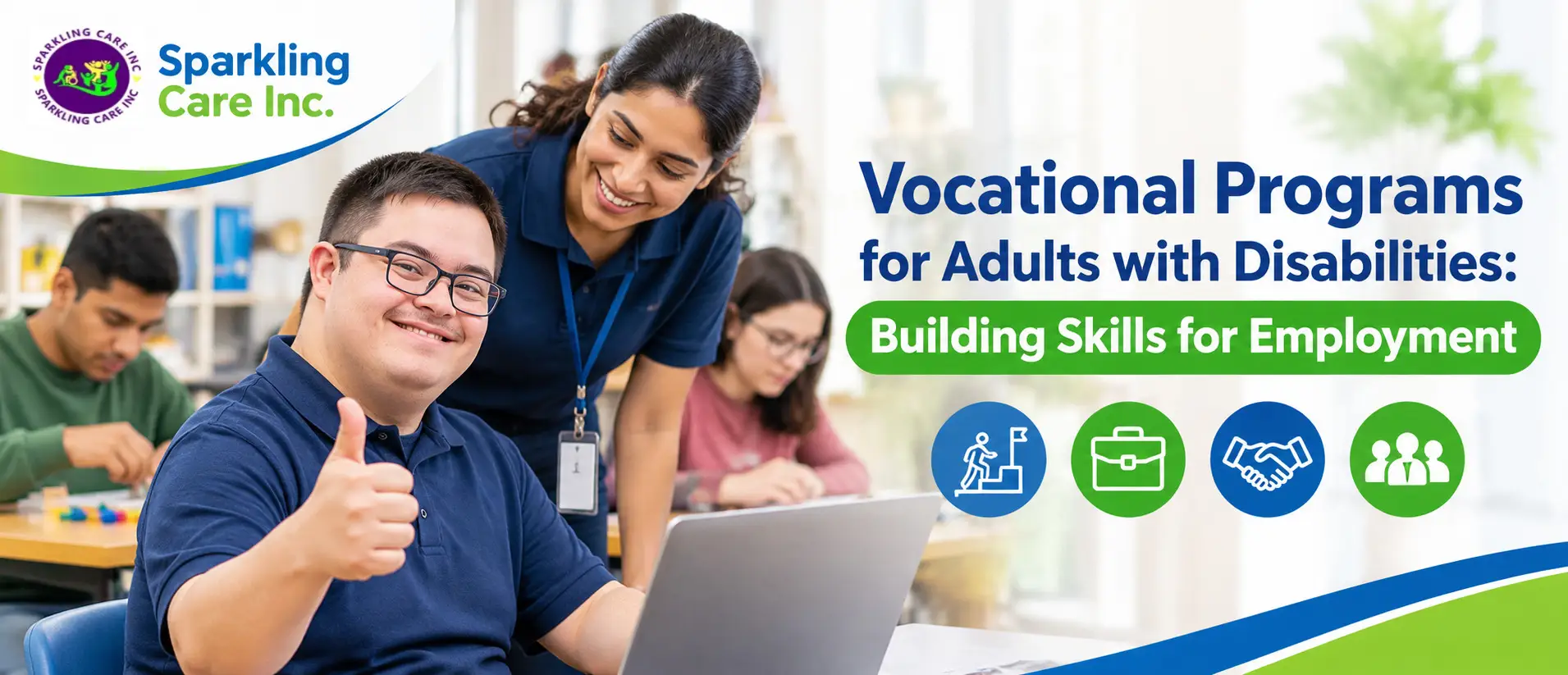
Vocational Programs for Adults with Disabilities: Building Skills
Explore vocational programs for adults with disabilities, workplace skills, supported employment, and Maryland resources. Discover how Sparkling Care supports.
.webp)
Meaningful Day Activities for Adults with Disabilities: 20 Ideas for Growth and Independence
Discover 20 meaningful day activities for adults with disabilities that encourage independence, social skills, confidence, and community participation.
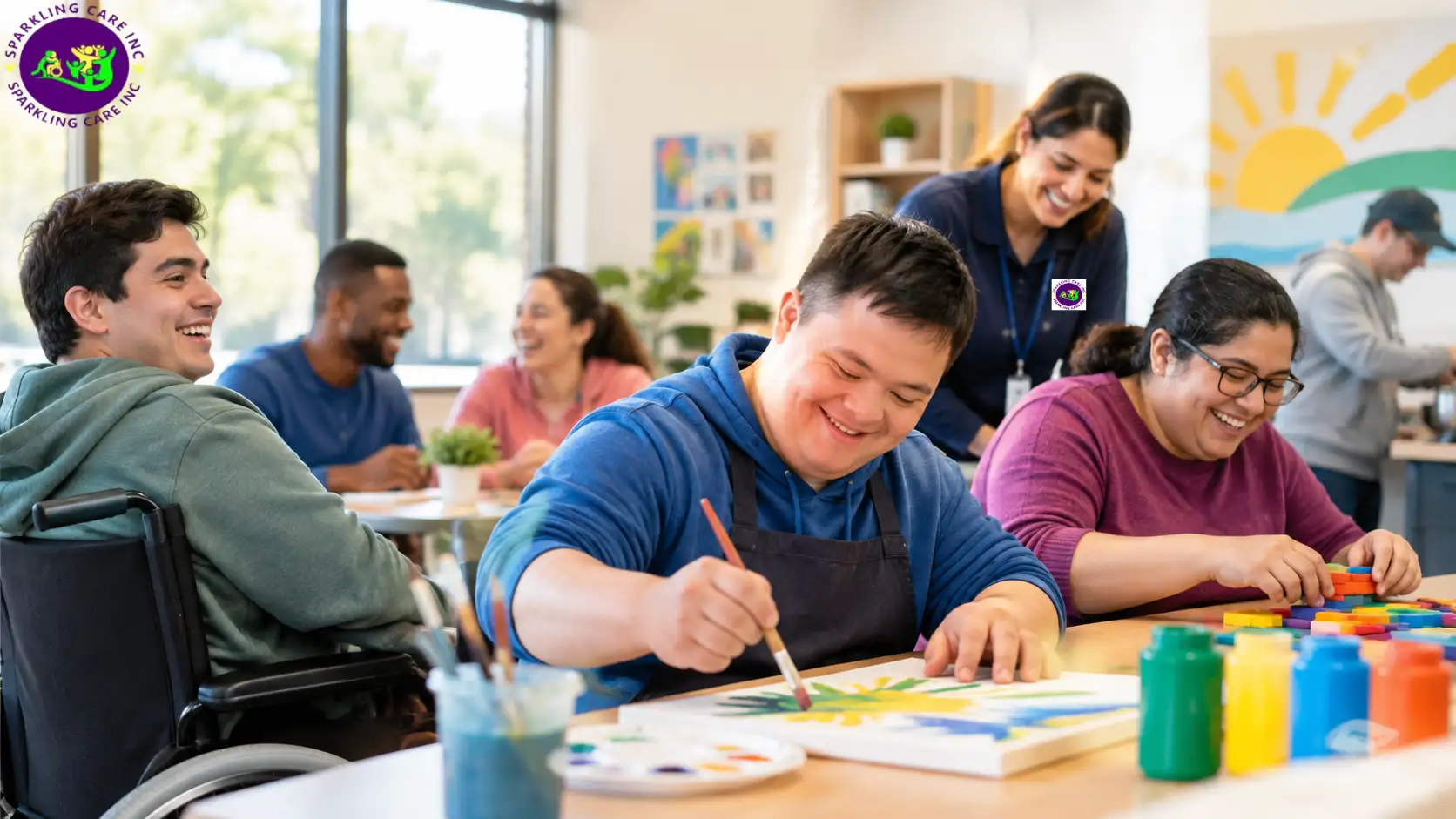
Day Programs for Adults with Disabilities: A Complete Guide for Maryland Families
Discover day programs for adults with disabilities in Maryland, including activities, life skills, community participation, Maryland DDA services.